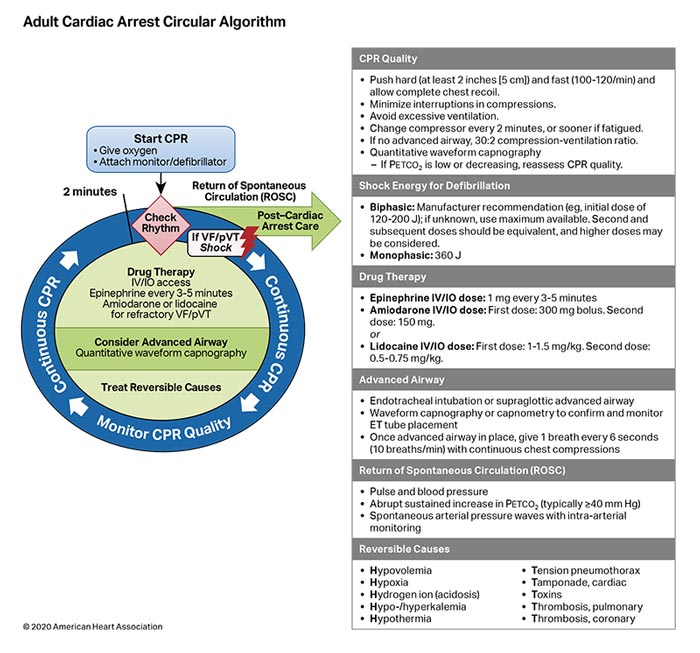
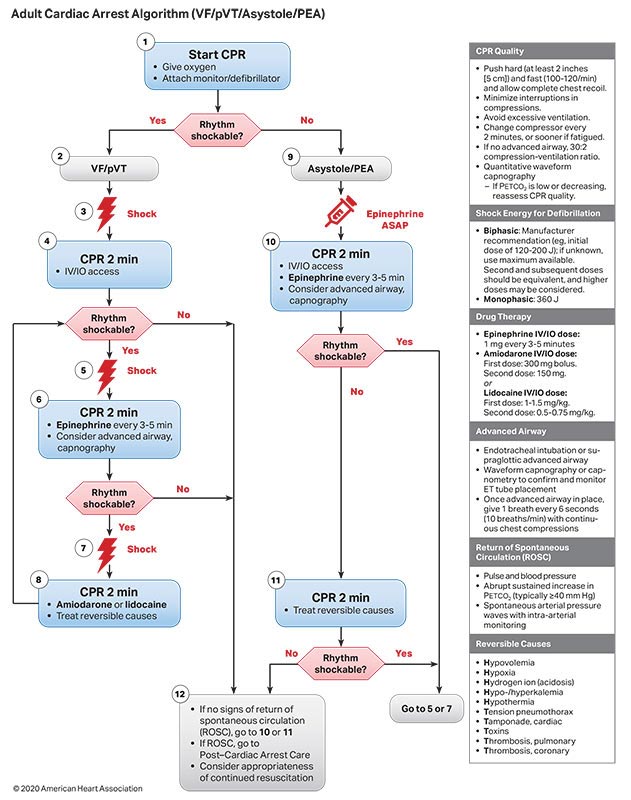
Rapid Response

 A - Access

 B - Backboard Status

 C - Code Status

 D - Defib

 D - Drips

 E - Epi

 E - Electricity (150-200J; tele)

 F - Fluids

 F - Family

 G - Glucose

 Hypoxemia → Intubate/ECMO

 Hypovolemia → IF, blood

 H+(acidemia) → bicarb

 Hyperkalemia → Ca gluconate, D5+insulin

 Hypothermia → warming

 Tamponade → pericardiocentesis

 Tension PTX → needle decompress

 Thrombosis/MI → PCI, Cards

 Thrombosis/PE → Hep Drip/IR

 Toxin/Drugs → reversal agents

 1. Circulation: Check pulses in all extremities, BP, HR, ascultate. If no pulse → activate code blue + CPR

 2. Airway: if unconscious or poor mentation &darr intubate

 3. Breathing: check for chest rise, ascultate for breath sounds; if absent → check pulse → present pulse → get CXR absent pulse → start CPR

 - Confirm Code Status

 - Confirm IV Access

 - Confirm IVs running

 - Access EMR

 - Order labs:

     → Blood gas + lactate, POC Glucose, CBC, CMP, Troponin x2, EKG, CXR

 - Check old ECG, CXR, Echo

 - Get Ultrasound

 - Notify attending

 - If RR becomes a code, RR team/primary team contact family

 - Preceding events

 - Code Status

 - RN name

 - Time of rapid called

 - Time of arrival

 - Time rapid was terminated

 - Vascular Access

 - Vitals

 - Focused exam

 - One-liner

 - Past medical history

 - Recent procedures

 - Last TTE, ECG, Tele

 - Review recent labs

 - Order labs:

     → Blood gas + lactate, POC Glucose, CBC, CMP, Troponin x2, EKG, CXR

 - Check old ECG, CXR, Echo

 - CXR /other imaging

  Check serial EKGs and hsTnT immediately and within 1-3 hours

    - Rule in: hsTnT ≥10 (F) or ≥15 (M) AND Δ ≥7 from baseline AND sx or ECG changes or concerning imaging (CCTA, cath)

    → consider ACS

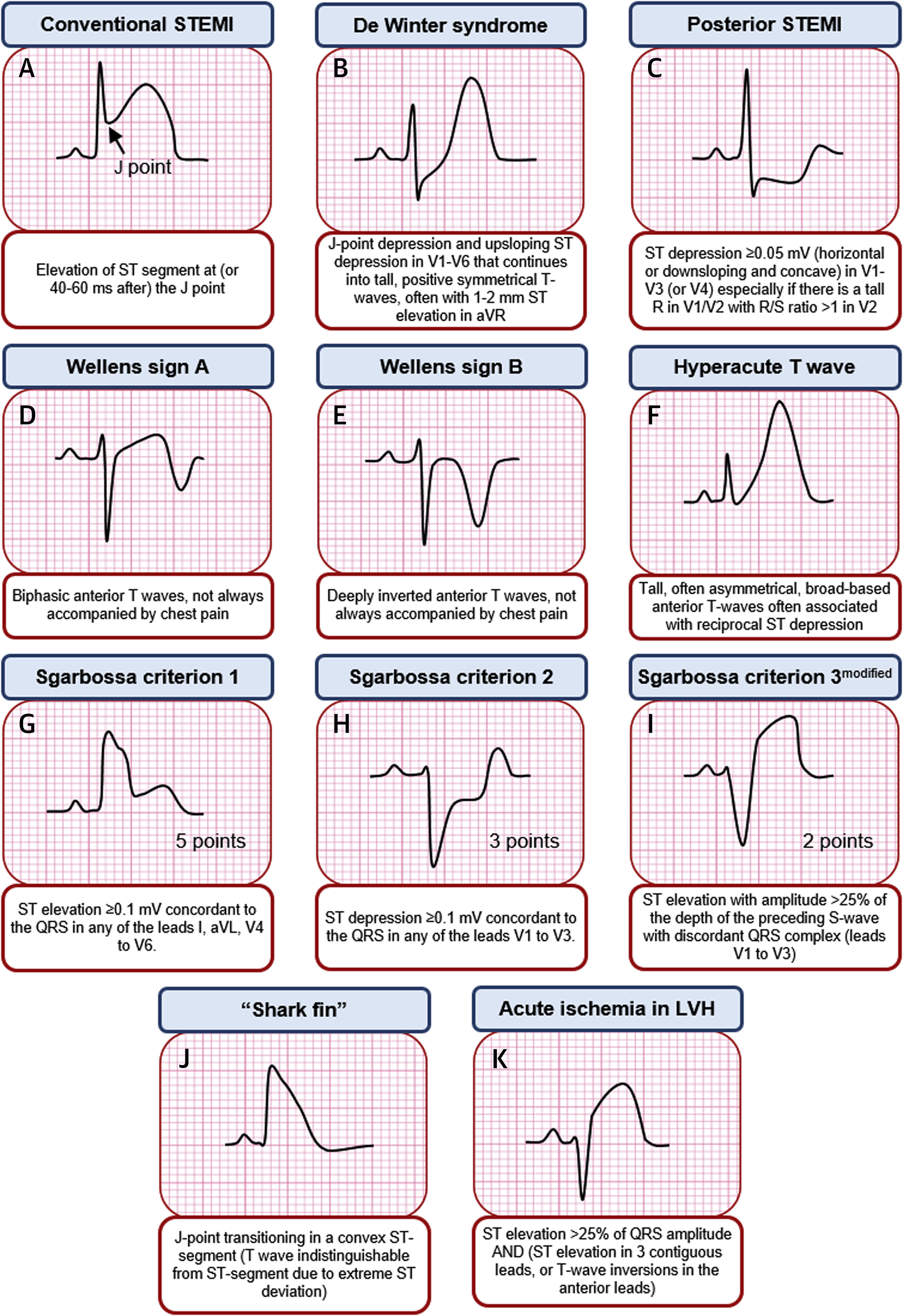
  STEMI:

    - 1mm STE in two contiguous leads (if V2-V3: >2.5mm in M<40, 2mm in M>40, 1.5mm in F) OR new LBBB AND + biomarkers

    - If baseline LBBB, use Sgarbossa's criteria: ≥1 mm concordant STE, 1mm STD V1-V3, ≥5 mm discordant STE

    - Electrically Silent: LCx or RCA lesions. Consider posterior V7-V9 leads, in which STE>0.5mm is diagnostic. Other changes: large R in V2-V3, STdep in anterior leads (mirror image effect)

Credit: J Am Coll Cardiol Case Rep. 2019 Dec, 1 (4) 666-668.

 - Non-STE ischemic EKG changes: ≥0.5mm STD (horizontal, downsloping), new TWI ≥1mm or normalization ("pseudonormalization") of prior TWI in s/o sx

 - ASA 325(load)

 - NTG 0.3-0.6mg x3, if refractory gtt (start 5-10mcg per minute)

 - High intensity statin

 - Heparin gtt (+/- bolus and use low intensity PTT goal)

 - BB start within 24 hours

 - ACEi/ARB start within 24 hours if BP and renal function normal

  Assess patient:

    - Focused exam, vitals, MS, pulmonary edema, murmurs, warm/cold, pupils, other sx

    - Review: most recent ECG, tele, labs, meds, events

    - Obtain: 12-Lead ECG, Defib + pads

    - IV Access: BMP, Mg, lactate ± trop if c/f ischemia

    - Monitor BP frequently

    - O2: supplement to >94%, maintain airway

 ↓

Shock if the patient is unstable:

    Hypotension / shock

    Altered mental status

    Ischemic chest discomfort

    Acute heart failure / pulmonary edema

 ↓

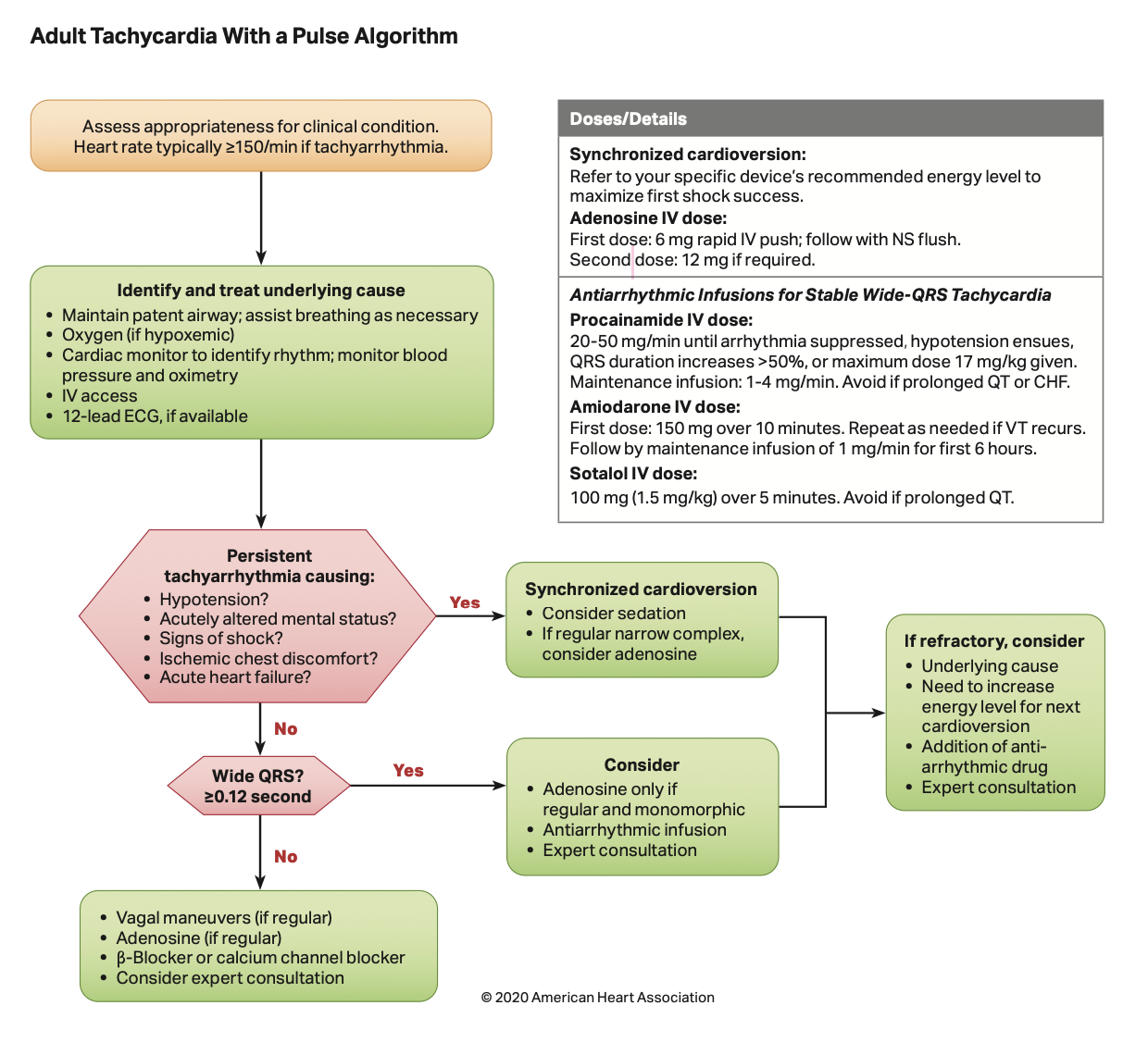
  Synchronized Cardioversion VS. Defibrillation

    Analgesia (1-2mg dilaudid) + sedation (2 mg lorazepam)

Rhythm Mode Dose (J) Biphasic
Narrow & Regular Sync 50-100
Narrow & Irregular Sync 120-200
Wide & Regular Sync 100
Wide & Irregular Defib 120-200

Narrow and Regular

    DDx ST, AT, orthodromic AVRT, AVNRT, Aflutter

    Tx/Rx Vagal Maneuvers → Adenosine → IV BB or Dilt, Amio/Procainamide

    Avoid BB or CCB if hypotensive

Narrow and Irregular

    DDx AF + RVR, MAT, Aflutter/AT + variable block, ST + freq PACs

    Tx/Rx IV BB or Dilt, Amiodarone, Digoxin

Wide and Regular

    DDx monomorphic VT, SVT with aberrant conduction, antidromic AVRT, preexcitation, meds & electrolyte abnormality

    Tx/Rx Amiodarone (OK for VT or SVT) → EF >40%: Lidocaine, Sotalol, Procainamide, Metoprolol EF <40%: Lidocaine

Wide and Irregular

    DDx PMVT (TdP & non-TdP), AFib/Aflutter/AT + pre-excitation vs aberrancy

    Tx/Rx Lido + 2g Mg (over 15min) & treat myocardial ischemia

    → Torsades (TdP) Mg gtt & HR (dopa, overdrive pacing, isoproterenol)

    → Non-TdP 2nd line = Amio, procainamide

 Medications:

 Narrow/reg:adenosine (6, 12, 12)

 Wide/reg:

 - Amio: 150mg → 1mg/min

 - Lido: 100mg → 50mg q5 x3 → 1-2mg/min

 - Procainamide: 20-50mg/min until hypoTN or QRS ↑ 50% → 1-4 mg/min

 - consider adenosine unless WPW

 Wide/irreg:

 - PMVT: amio, lido; tx ischemia

 - Torsades: Mg 2mg, ↑ HR Isoprot.

 - AF+WPW:procainamide, ibutilide (1mg)

 (🚫 adenosine, BB/CCB, dig)

  VAGAL MANEUVERS:

    - Unilateral Carotid Massage: supine with neck extended → steady pressure to carotid sinus (inferior to angle of the mandible at level of thyroid cartilage near carotid pulse), avoid if prior TIA/CVA in past 3mo, and those with carotid bruits

    - Modified Valsalva Maneuver: semi-recumbent → blow forcefully into a 10cc syringe x10-15 seconds → reposition to supine and passively raise legs at 45° for 15 seconds; 43% effective in breaking SVTs vs 17% with standard Valsalva

    - Also consider: cold ice face immersion or ice-water bag to face (diving reflex, more effective in children); 17% success.

  Assess patient:

   - Focused exam, vitals, MS, pulmonary edema, murmurs, warm/cold, pupils, other sx

   - Review: most recent ECG, tele, labs, meds, events

   - Obtain: 12-Lead ECG, Defib + pads

   - IV Access: BMP, Mg, lactate +/- trop if c/f ischemia

   - Monitor BP frequently

   - O2: supplement to >94%, maintain airway

 ↓

Shock if the patient is unstable:

    Hypotension / shock

    Altered mental status

    Ischemic chest discomfort

    Acute heart failure / pulmonary edema

 ↓

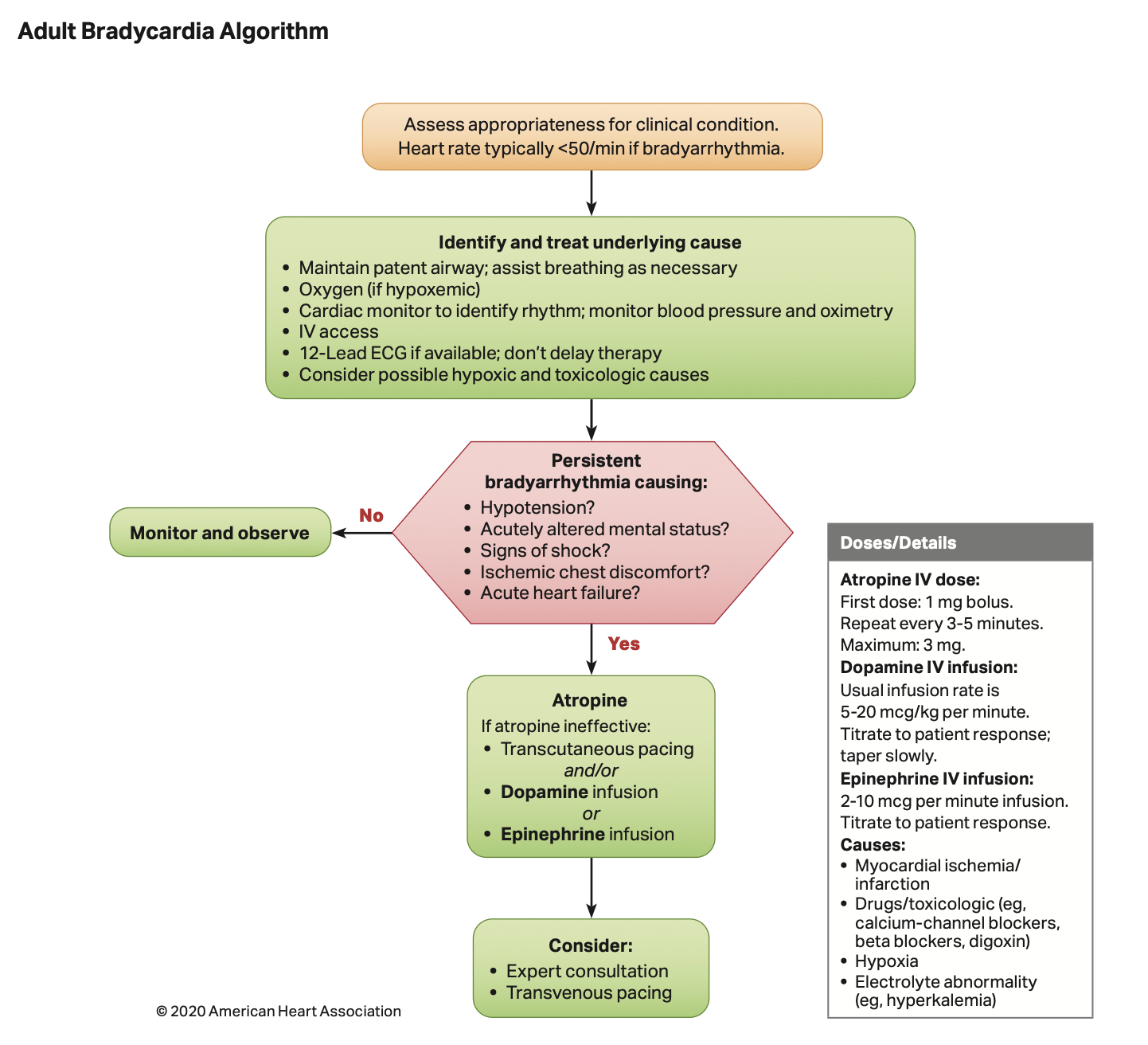
Trial medications, low threshold to pace If pulseless arrest develops → ACLS PEA/Asystole

 DDx conduction disease, CCB/BB intoxication, R sided MI, vagal, Rx effect, ↑ ICP, hypothyroidism, hypoxemia

Medications:

 - Atropine 1mg q3-5m, max 3mg, 2hr half life

   → less effective s/p heart transplant, avoid with AV block Mobitz II or CHB

 - Dopamine 5-20 mcg/kg/min

 - Epinephrine 2-10mcg/min

 - Isoproterenol 2-10mcg/min

 Transcutaneous pacing

  - Basics: Emergent 2mg lorazepam + 2mg dilaudid +/- intubate → turn to PACER → SET RATE: 100 BPM + SET OUTPUT: 100 mA → turn output down to minimum needed to → capture → adjust rate down

  - Transvenous pacing (cards consult)

 Specific Antidotes by Cause

    - Beta blocker: glucagon 3-10mg IV (if no response, repeat bolus, if response, infusion at 3-5mg/h)

    - Calcium channel blocker: glucagon as above, calcium gluconate 3-6g q10-20min or gtt, insulin 1U/kg bolus with 0.5U/kg gtt

    - Digoxin: dig immune FAB vial, 1 vial binds ~ 0.5mg digoxin, administer over 30min

    - Opioids: naloxone 0.4-0.8mg IV, consider gtt

    - Organophosphate: atropine 2-5mg IV (double dose q5min until effect), pralidoxime 1-2g IV over 15-30min

 Disclamers:

   *Nurse: Place pads on patient

   *Dont forget to specify on call within drug orders

   *Do not use Dobutamine as it worsens hypertension

 Severe asymptomatic HTN (formerly HTN urgency): BP ≥ 180/120 w/o evidence of end-organ damage (may have mild headache)

     - commonly due to pain, anxiety, urine retention, meds (e.g. steroids), OSA, nausea, withdrawal, etc.

  Route of Medications: PO > IV

 Hypertensive emergency: BP ≥ 180/120 w/ evidence of acute end-organ damage (rate of rise may be more impt. than actual BP)

     End-organ damage:

     - Neuro: HTN encephalopathy (severe HA, seizure, AMS), PRES, TIA, CVA (SAH, ICH)

     - Retinopathy: papilledema, hemorrhage

     - Resp/CV: pulm edema, MI, angina, Ao dissection

     - Heme: MAHA

     - Renal: AKI, hematuria

 EKG + troponin, U/A, VBG +Lactate

 Check distal pulses (so that we can pick a better med)

 Restart home meds if appropriate/look for missed BP meds

   (It is ok to use ICU section of antihypertensive dosing)

 ACS:

    - SBP <140 w/in 1h; keep DBP >60

    - Topical nitro, esmolol > labetalol, nicardipine.

    - BBs contraind. if LV failure w/ pulm edema, HR <60, SBP <100, poor peripheral perfusion, or 2°/3° heart block

    - Topical nitro contraindicated in RV MI

 Acute pulmonary edema:

    - SBP <140 w/in 1h

    - Topical nitro, nitroprusside, clevidipine; BBs contraindicated

 Ischemic stroke:

    - <185/110 if tPA; <220/120 if no tPA or end-organ damage (permissive HTN)

[*Neurologic - (HTN encephalopathy) - Nicardipine, SAH - nomodipine, CVA/stroke - labetalol]

[*Renal - nicardipine]

[*Cardiac - BB, nitroprusside]

 Labetalol - IV - 10-80mg q10min → PO

 Hydralazine - IV - 5-20mg q15-30min → PO

 Esmolol - IV - 500µg/kg load + 25-50µg/kg/min; then adjust by 25µg/kg/min q10-20min up to 300µg/kg/min

    - Ao dissection, CAD

 Nicardipine - IV - Start at 5mg/h; ↑ by 2.5mg/h q5-15min; max 15mg/h

    - SAH, CVA, Ao diss

 Nitropaste (topical); Captopril (PO)

 Initial workup: focused H&P, ensure access, review meds, ECG/CXR, ABG/VBG, CBC/diff, CMP, TnT, lactate, CVO2, monitor UOP

 Access: obtain 3 IVs (16G or less) if possible. Consider Cordis for rapid infusion; TLC, PICC cannot resus. as quickly

 Fluid resuscitation: crystalloid bolus (not infusion). Use caution w/ fluids if c/f cardiogenic shock

 Cardiogenic: MI, ADHF, BB/CBB tox, acute myocarditis, valvular disease (AS)

 Distributive: sepsis, anaphylaxis, toxin, liver dx, endocrine causes, sleeping, spinal shock

 Hypovolemic: bleeding, diuresis, HD, GI losses

 Obstructive: PE, tamponade

 - Do volume assessment, check last echo

  - obtain STAT coags, CBC, fibrinogen, iCa2+.

  - Ensure access.

  - Hold pressure, correct coagulopathies.

  - PCC for warfarin reversal, DDAVP for antiplatelet reversal.

  - If INR >2, use FFP; Plt >50, transfuse plts, fibrinogen <100, use cryoprecipitate.

  - If iCal <1.10, give IV Ca, consider TXA (1g IV over 10 min, then 1g over 8h), aminocaproic acid (5g IV over 1h, then 1g per hr X 8hr)

     → If suspect bleed secondary to variceal bleeding, administer octreotide for splanchnic vasoconstriction.

     → If hypotensive/unstable, consider TXA (1g IV over 10 min, then 1g over 8h), aminocaproic acid (5g IV over 1h, then 1g per hr X 8hr)

 Fluid resus.: Blood >>> 5% albumin > LR > NS. Transfuse pRBCs if Hgb <7.0 or if active bleeding - transfuse to hemodynamics.

 Obtain source control: call proceduralists, obtain STAT CTA if stable.

  Blood Bank: 4-6292

High Risk

Resuscitation:

- Limit IVF: can try 500cc if CVP low, but ↑RV distention →RV ischemia + septal bowing →↓LV SV →↓CO

- Inotropes: if low CO, consider dobutamine

- Vasopressors: NE generally preferred

- O2: HFNC pref. for severe hypoxemia. Mech vent. ↑↑↑risk: HoTN from induction & PPV →↓ venous return →↓RV CO, ↑RV failure

- Circulatory collapse/arrest: VA ECMO

Anticoagulation: UFH (w/ bolus)

Thrombolysis: systemic unless contraindicated

Embolectomy: if thrombolysis contraind/fails; can be catheter-directed; surgery if all options contraind/fail or if clot in transit in RA/RV, PFO

Intermediate Risk Anticoagulation: LMWH preferred > UFH (faster time to therapeutic range) unless impending hemodynamic collapse, thrombolysis (or CrCl <30 or severe obesity).
Low Risk Anti-coagulate (unless contraindications), regardless of sx

Agent: DOAC > VKA or LMWH; if malig.: DOAC or LMWH > VKA

 Stable: Hep gtt+ consult IR

 Hep gtt, EKG, trop, TTE, PT/INR, proBNP, call pharm for tPA

 Unstable: Call PERT: 520-XXX-XXXX, Call MICU

  2 large bore IV, Type/Screen, Consent, pRBC, IV PPI 40mg, Octreotide 50mcg (if c/f variceal bleed), CXR if portal HTN

  GI on call: 520-xxxx-xxx Blood Bank: 4-6292

 Defintion:proximal to ligament of Treitz

 S/Sx: hematemesis, melena, hematochezia

 High-Risk Features in UGIB: hypotension, tachycardia, coagulopathy (INR > 1.5), AMS, syncope, age > 65, liver dx, CHF

 Call ICU for:

   - BP <l90 and HR >100

   - Hct <20/Hgb <7 x2 30min apart

   - require >2L VF or 2u pRBCs to prevent instability/keep Hct >5

   - ATLS hemorrhagic shock class III;

 Assessment:

  Inital workup: CBC (q2-8hr), CMP, coags, type & screen, rectal exam

  Stabalization: NPO; supplemental O2 as needed, intubation if high-risk for aspiration (large volume hematemesis, AMS); ensure ≥2 PIV (18G or larger; rarely done by IV nurse)

   → Resuscitation/Transfusion:

   - IVF (isotonic crystalloid) for hypotension.

   - Do not delay transfusion if actively hemorrhaging, otherwise transfuse pRBCs for Hgb >7 or Hgb >8 if CAD.

   - Note: Hct drop lags 24-72h from onset of bleeding.

   - For severe/ongoing bleeding (generally after 4u pRBCs), activate massive transfusion protocol (see Transfusion Medicine).

   - Avoid overtransfusion if possible EVs (can ↑ portal pressures and worsen bleeding).

   → Correct coagulopathy: Tranfuse plts for plt >50k. Consider prothrombin complex concentrate (PCC) (preferred over FFP for lower volume, faster onset). If uremic, consider ddAVP (0.3 mcg/kg). If ESLD, INR inaccurate - avoid FFP volume →↑ portal pressure

  IV PPI: pantoprazole 40mg BID (neutralizing acid stabilizes clots); ↓ high-risk lesions requiring endoscopic therapy but unclear clinical impact pre-EGD

  For cirrhosis: IV octreotide 50 mcg bolus (may repeat bolus in first hour if bleeding uncontrolled) followed by octreotide gtt at 50 mcg/hr for 3-5 days. IV CTX 1g q24hr x7 days for ppx against bacterial infections and mortality benefit. Stop β-blockers.

 Defintion:distal to ligament of Treitz

 S/Sx: hematochezia, rarely melena, BUN/Cr typically ɬ20

 Call ICU for:

   - BP <90 and HR >100

   - Hct <20/Hgb <7 x2 30min apart

   - require >2L IVF or 2u pRBCs to prevent instability/keep Hct >5

   - ATLS hemorrhagic shock class III;

 Assessment:

   Inital workup: CBC (q2-12hr depending on severity of bleed), CMP, coags, type & screen. Consider:

   → CT angiography: 1st line imaging for lower GI bleeding in both hemodynamically stable and hemodynamically unstable patients (ACR Approp. Criteria). Detects bleeding at a rate of 0.3-0.5mL/min. Consider if shock index (HR/SBP) >1.

  Stabilization: NPO; supplemental O2 as needed, intubation if high-risk for aspiration (large volume hematemesis, AMS); ensure ≥2 PIV (18G or larger; rarely done by IV nurse)

   → Resuscitation/Transfusion:

   - IVF (isotonic crystalloid) for hypotension.

   - Do not delay transfusion if actively hemorrhaging, otherwise transfuse pRBCs for Hgb >7 or Hgb >8 if CAD.

   - Note: Hct drop lags 24-72h from onset of bleeding.

   - For severe/ongoing bleeding (generally after 4u pRBCs), activate massive transfusion protocol (see Transfusion Medicine).

   - Avoid overtransfusion if possible EVs (can ↑ portal pressures and worsen bleeding).

   → Correct coagulopathy: Tranfuse plts for plt >50k. Consider prothrombin complex concentrate (PCC) (preferred over FFP for lower volume, faster onset). If uremic, consider ddAVP (0.3 mcg/kg). If ESLD, INR inaccurate - avoid FFP volume →↑ portal pressure

 Approach:

   Assess circulation, airway, breathing & confirm access and code status

      - Place on supplemental O2: NRB to start, can always wean later

      - Red flags → ICU

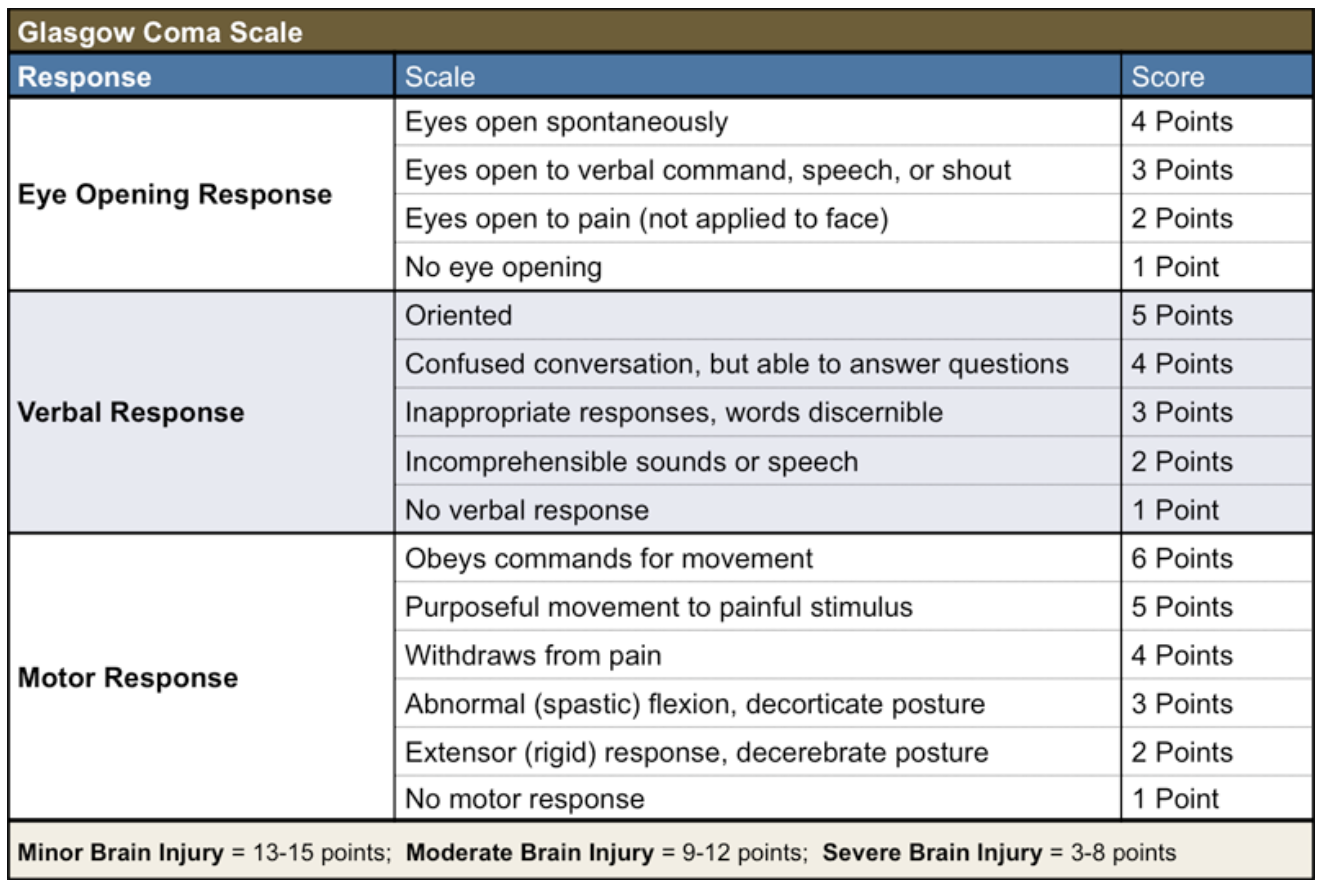
        - GCS <8 (hard criteria for intubation)

        - pooling secretions

        - hemoptysis

        - hypoxemia despite supplemental O2 (SpO2 <80%, PaO2 <55mmHg)

        - severe hypercapnia despite BiPAP

        - tiring out (↑ WOB, progressive hypercapnia)

        - RR >35

      - Temporize:

        - head of bed up, suction, head-tilt chin lift (preferred if no concern for C- spine injury) vs jaw-thrust to open airway

        - bag-mask ventilation (enough volume to see chest rise; 8-10 breaths/min).

        - Consider OP airway prior to intubation


   Initial workup

      - CXR:

        - look for new infiltrate (aspiration, PNA), pulmonary edema, lobar collapse (mucus plug), PTX.

        - If nl, consider ischemia, PE, acidosis

      - ABG:

        - worrisome if PaCO2 >45mmHg (poor ventilation) or falling (tachypnea), PaO2 <60mmHg (poor oxygenation), pH <7.25

      - Labs:

        - VBG (& ABG if possible, correlate to VBG. Widened A-a gradient >20 = abnormal gas exchange vs nl <20 = global hypoventilation), hs-Trop, NT-proBNP, lactate, BMP, CBC


 Treatment:

      - Target SpO2 90-94%: Most acutely ill patients (↟SpO2 >94-96% in acutely ill adults a/w ↑mortality (Lancet 2018;391:1693))

      - Lower target (SpO2 88-92%): At risk for hypercapnic respiratory failure (COPD, OHS, OSA, decreased central respiratory drive, neuromuscular respiratory disease)

      - Higher Target (~SpO2 ~100%): CO poisoning, cluster headaches, sickle cell crisis, pneumothorax

      - NIPPV (BiPAP for COPD; CPAP for CHF): RR >25-30, accessory muscle use, pH <7.35, PaCO2 >45mmHg

      - BiPAP/HFNC MUST NOT DELAY AN INDICATED INTUBATION!

   Supplemental oxygen therapy

      NC: Flow 1-6 LMP, FiO2 24-40%

      Simple Facemask: Flow 6-10 LMP, FiO2 24-45%, Flow rates <6LPM lead to re-breathing of CO2

      NRB: Flow 10-15 LMP, FiO2 60-100% (Consider first for acute hypoxemia)

      HFNC: Flow 10-60 LMP, FiO2 21-100%


 Disease Specific Treatment:

    - CHF: CPAP, IV diuresis, nitrates (paste or drip, if BP room)

    - Asthma: nebulizers (albuterol 2.5-5mg q20min or stacked DuoNeb), steroids (IV methylpred 125mg q6h), IV Mg (2g/20 min). Trial BiPAP; however, if RR remains >25, VBG w/ nl or rising CO2, AMS, or bradycardia, discuss intubation.

    - COPD: BiPAP, nebulizers (stacked DuoNebs), steroids (IV methylpred 60-125mg); IV Mg (2g/20 min), abx if 2/3: ↑ sputum volume, purulence, dyspnea

    - Hemoptysis (massive): place pt in lateral decubitus, bleeding lung side down; volume resuscitate, reverse coagulopathies

    - Mucus plugging: airway suctioning, chest PT, guaifenesin, place pt in lateral decubitus, good lung side down

    - PE: if high suspicion and no contraindication, start empiric AC (LMWH therapeutic faster vs UFH gtt). Consult PERT.

    - PTX: if unstable, bedside needle thoracostomy (14-16G angiocath, 5th ICS at mid-axillary line or 2nd ICS at mid-clavicular line); page Thoracic Surgery or Pulm for chest tube

    - Pleural effusion: Therapeutic thoracentesis

    - Opioid overdose: Narcan 0.4mg starting dose up to 2mg IV/IM q2min, observe response, uptitrate to adequate RR. Given short half-life, consider gtt if responsive to bolus at 2/3 of bolus dose per hour (ex: 0.2-0.6 mg/h)

    - Anaphylaxis: Initial: epi (1:1000) 0.3mL = 0.3mg IM, q5-15min PRN. Other agents may follow: diphenhydramine 25-50mg IV, nebulized albuterol, methylprednisolone 125 mg IV
    - ACS (see ACS): ASA 325mg, atorvastatin 80mg, nitrates (SL/nitropaste gtt), heparin, diuresis, O2, Pain cntrl, consult Cards


 Initial Management:

  Dextrose, 1 amp of D50 after thiamine. Check finger stick glucose first if possible

  Oxygen by nasal cannula or mask, with oropharyngeal airway if necessary

  Naloxone, usually 0.4-2 mg (IV preferred, can give IM, SC, or intra-tracheal), repeat q 20-30 minutes.

  Thiamine, 100 mg IV (before glucose to prevent precipitation of Wernicke's encephalopathy)


 NS: CVA, ICH, sz, infxn, PRES

 Metabolic toxins: NH3, CO2, BUN, Na, glucose

 Exogenous toxins: meds, drugs, w/d

 Vitals: HTN/HoTN, hypoglycemia, hypoxemia

 Misc: TTP, AI, hypothyroid


 MOVE STUPID:

  Metabolic: vitamin B12 or thiamine deficiency, hepatic encephalopathy

  Oxygen: hypoxemia, hypercarbia, anemia, CO poisoning

  Vascular: stroke, hemorrhage, hypertensive encephalopathy

  Endocrine

  Seizures, Structural lesions with mass effect, hydrocephalus, cerebral edema

  Tumor, trauma, or temperature

  Uremia

  Psychiatric: DX of exclusion

  Infection

  Drugs: intoxication/withdrawal, delirium


 Work-up:

   - Neuro Exam: focal deficits, meningismus, myoclonus, tremor, asterixis

   - Labs: CBC, CMP, TSH, Ca/Mg/Phos, ammonia, Utox, U/A, ABG, ECG, blood and urine cultures, CXR

   - Imaging: non-con Head CT

   - Lumbar puncture: if fever, meningeal signs, or immunosuppressed

   - EEG: consider in any patient who is fluctuating

  Lorazepam 2-4mg IV/I0x2, may repeat at 3-5 minutes if seizures continue

  Diazepam 20mg PR

  Midaz 10mg IM/Nasal/Buccal

  Levetiracetam 20mg/kg

  Neuro On-Call: 520-xxx-xxxx

  Epi 0.3-0.5 IM (1:1000; 1mg/mL)

  Epi 0.1-0.3mg IV (1:10,000; 0.1mg/mL)

  → repeat q5-15min; start gtt if >3 required

  Other agents: Benadryl 50mg, methylpred 125mg, albuterol neb, IVF